
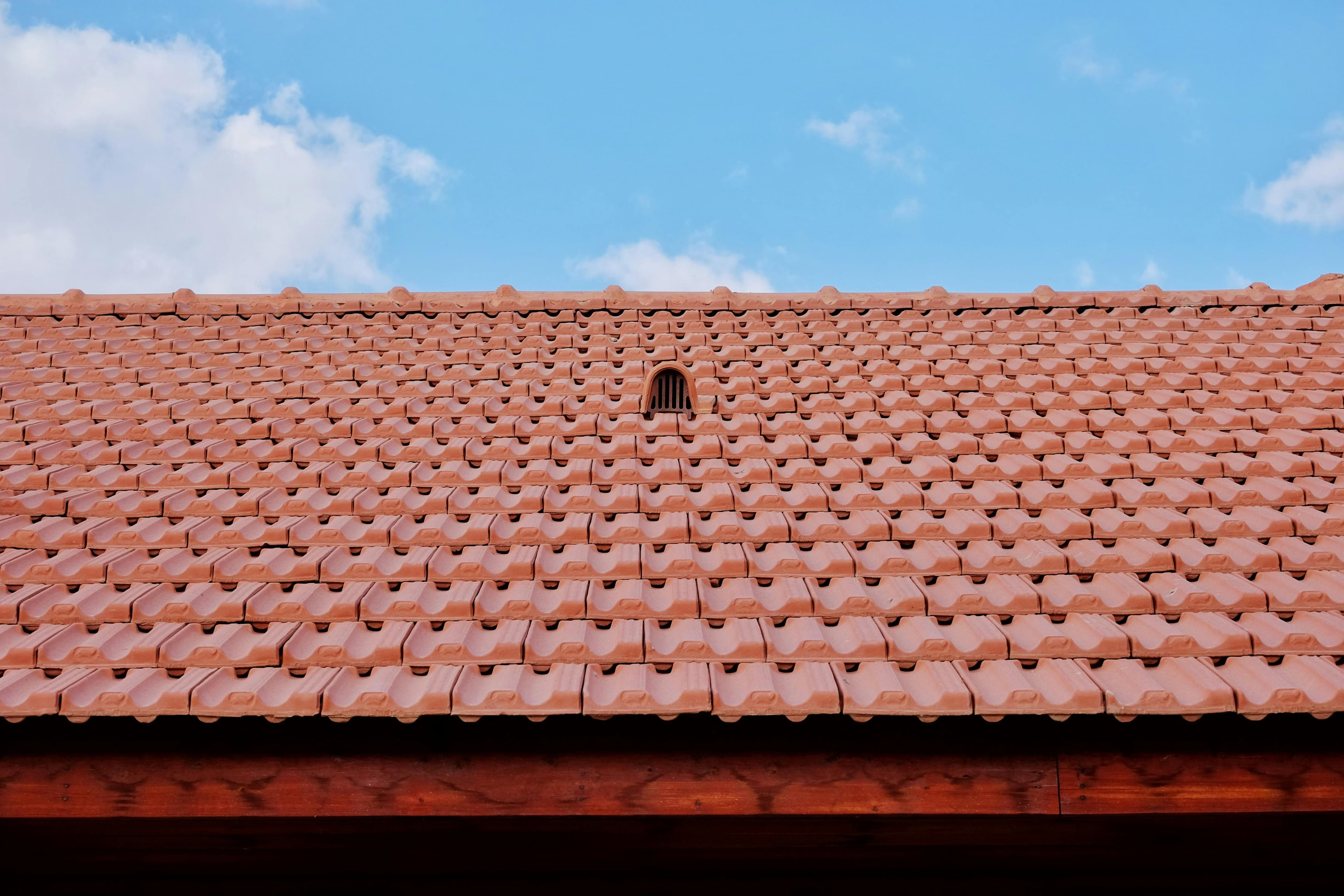
Short answer: clay tile lasts longer, holds its color for the life of the roof, and handles salt air better. Concrete tile costs less, comes in more shapes and colors, and performs well for 25 to 40 years in South Florida. If you are staying in the house for decades or you live near the water, clay earns the premium. Otherwise concrete is the sensible choice.
Both are excellent roofs. This is not a case where one option is a trap. It is a case where two good options suit different situations, which is less dramatic but more useful.
Side By Side
| Concrete Tile | Clay Tile | |
|---|---|---|
| South Florida lifespan | 25–40 years | 35–50+ years |
| Relative cost | Lower | 20–40% higher |
| Weight per square foot | 9–12 lbs | 6–10 lbs |
| Color | Pigment through or on surface, fades | Natural, does not fade |
| Salt air resistance | Good | Excellent |
| Water absorption | Higher | Lower |
| Shape and profile options | Many | Fewer, mostly barrel |
| Reroof structural check | Often needed | Sometimes needed |
Both meet Florida Building Code, both require a permit, and both need a Miami-Dade NOA for products installed in Miami-Dade and Broward.
Concrete Tile: The One On Most Miami Roofs
Concrete tile is sand, cement, and water, pressure-formed and cured. It has been the default in South Florida for decades, and if you drive through Kendall or Pembroke Pines, most of what you see is concrete.
Why it wins on price. Cheaper raw materials and a faster manufacturing process. On a full roof, that difference is thousands of dollars.
Why it wins on looks, sometimes. Concrete can be molded into flat, low, or high profiles and made to imitate slate, wood shake, or barrel clay. If you want a specific architectural look, concrete has more options.
Where it loses. Two places, and both are about time.
The first is color. Concrete tile is pigmented, and pigment fades under Florida UV. Slowly, and mostly evenly, so many homeowners never notice. But a 20-year-old concrete roof is not the color it was on install day, and if you replace a few broken tiles at year 18, the new ones will not match. (This surprises people. It should not, but it does.)
The second is water. Concrete is more porous than clay. It absorbs more moisture, which means more weight during our rainy season and a friendlier surface for algae and mold in a place with 62 inches of rain a year. A concrete roof needs a soft wash every 12 to 18 months. Not pressure washing, which strips the surface and voids warranties. Soft wash.
Clay Tile: The Expensive One That Keeps Going
Clay tile is fired earth. The kiln does something the concrete process cannot: it locks the color into the material permanently and produces a much denser, less absorbent tile.
Lifespan. Clay commonly reaches 35 to 50 years in South Florida, and clay roofs past 50 exist here. It outlives concrete by a meaningful margin, and it outlives most of the reasons people had for choosing a roof in the first place.
Color that stays. The terracotta of a clay tile is the material, not a coating. It does not fade. A repair at year 25 matches, because there was never a finish to lose.
Salt air. Coastal South Florida is hard on building materials. Clay's low porosity makes it more resistant to salt and moisture cycling than concrete. If you are in Miami Beach, Key Biscayne, or anywhere within a few miles of the water, this matters more than the price difference suggests.
Weight, and the surprise inside it. People assume clay is heavier because it feels more substantial. It is usually the opposite. Concrete runs 9 to 12 pounds per square foot; clay runs 6 to 10. On a reroof over an older structure, that difference occasionally decides what you are allowed to install.
Where it loses. Cost, at 20% to 40% more. Fewer style options, because clay is mostly barrel and mission profiles. And clay is more brittle underfoot, so anyone walking your roof needs to know what they are doing. Every tile roof needs that, but clay is less forgiving of someone who does not.
The Part Both Of Them Depend On
Here is the strong opinion, and we will back it with the one number that matters: the underlayment fails long before the tile does.
Tile is a rain shield and a wear surface. The waterproofing is the underlayment beneath it. Concrete tile lasts 25 to 40 years and clay lasts 35 to 50, but a standard underlayment may go 20 to 30. Which means most tile roofs in South Florida are not replaced because the tile failed. They are replaced because the layer nobody can see gave up while the tile was still fine.
This is why a tile roof can look flawless from the street and leak into a bedroom. It is also why "my roof looks great" is not evidence of anything.
When you get a tile roof quote, ask what underlayment is specified. A self-adhered modified bitumen or synthetic underlayment rated for high heat costs more upfront and adds years to the roof. Choosing premium tile over a basic underlayment is buying an expensive lid for a cheap container.
Real Costs In South Florida
| Typical Installed Range | |
|---|---|
| Tile roof replacement, general | $15,000–$35,000 |
| Concrete tile | Lower end of that range |
| Clay tile | Upper end, or above |
| Structural evaluation if required | Add to either |
Ranges depend on roof size, pitch, complexity, tear-off of the old roof, and how much decking needs replacing once the old roof is off. Anyone quoting a tile roof without seeing it is quoting a fantasy.
Financing is available at $0 down with terms up to 15 years, and PACE financing is common in Florida for this kind of work.
Which One For Your House
Choose concrete if: you want a specific architectural profile, you are budget-conscious, you are more than a few miles inland, or you might sell within 15 years. You will not regret it, and you will spend less.
Choose clay if: you are staying long term, you are near the coast, you want the color to still be right in 2050, or your structure benefits from lighter material. The premium is real, and over 45 years it is also small.
Choose neither if your roof deck cannot carry tile and reinforcing it costs more than the roof. Metal is 40 to 70 years and much lighter. We would rather tell you that than sell you a tile roof your house cannot hold.
When We Would Tell You Not To Hire Us
If your tile roof is leaking and someone tells you the whole roof is finished without inspecting the underlayment, get another opinion. Sometimes the tile is fine and the answer is a lift-and-relay: remove the tile, replace the underlayment, put the same tile back. It costs considerably less than a full replacement and it is the right call more often than the industry admits.
If your tile roof is under 15 years old and leaking in one spot, that is a repair. Take the repair.
Frequently Asked Questions
Which lasts longer, concrete or clay tile?
Clay. In South Florida, clay commonly reaches 35 to 50 years or more; concrete typically runs 25 to 40.
Is clay tile heavier than concrete tile?
Usually no, which surprises most people. Concrete runs 9 to 12 pounds per square foot and clay runs 6 to 10.
Does concrete tile fade in Florida?
Yes. It is pigmented, and Florida UV works on pigment. The fade is gradual and even, so it is most visible when new replacement tiles sit next to old ones.
Can I pressure wash a tile roof?
No. Full-pressure washing cracks tile, strips the surface, and can void your warranty. Soft washing is the correct method, and every 12 to 18 months is the right frequency here.
Do I need a permit for a tile roof in Miami-Dade?
Yes, and the products need a Miami-Dade NOA. An unpermitted roof does not show up in your permit record, which causes problems at resale and with insurance.
The Bottom Line
Concrete is the practical answer for most South Florida homes. Clay is the right answer for coastal homes, long-term owners, and anyone who wants the roof to be the last thing they think about.
Then spend the argument you saved on the underlayment, because that is the part that decides when this roof ends.
Call (786) 983-7928 for a free estimate. We will get up there, tell you what you actually have, and if the answer is a lift-and-relay instead of a replacement, that is what we will quote. Smaller invoice, better roof, and we still sleep fine.