
Hurricane season officially runs June 1 through November 30. In South Florida, the peak period is mid-August through mid-October — roughly 78% of all tropical storm activity concentrates in those eight weeks. The time to prepare is April and May. Once a storm is in the forecast, contractors are booked, hardware stores are stripped, and nothing structural can get fixed.
Here's the complete pre-season checklist, plus a post-storm section most homeowners don't have.
Step One: Get Your Free Wind Mitigation Inspection
Before spending anything on hurricane prep, apply for the My Safe Florida Home program. The state offers free wind mitigation inspections for homeowners with a homestead exemption — and if the inspection identifies vulnerabilities, you may qualify for matching grants of up to $10,000 for qualifying improvements (impact windows, opening protection, roof upgrades).
That means: the state tells you what your home's actual wind vulnerabilities are, for free, and then offers to pay for half the fix. This is the correct first step.
The program's funding gets allocated early in the year and runs out. Check current status at mysafefloridahome.com before contracting any work.
Roof Inspection (April–May)
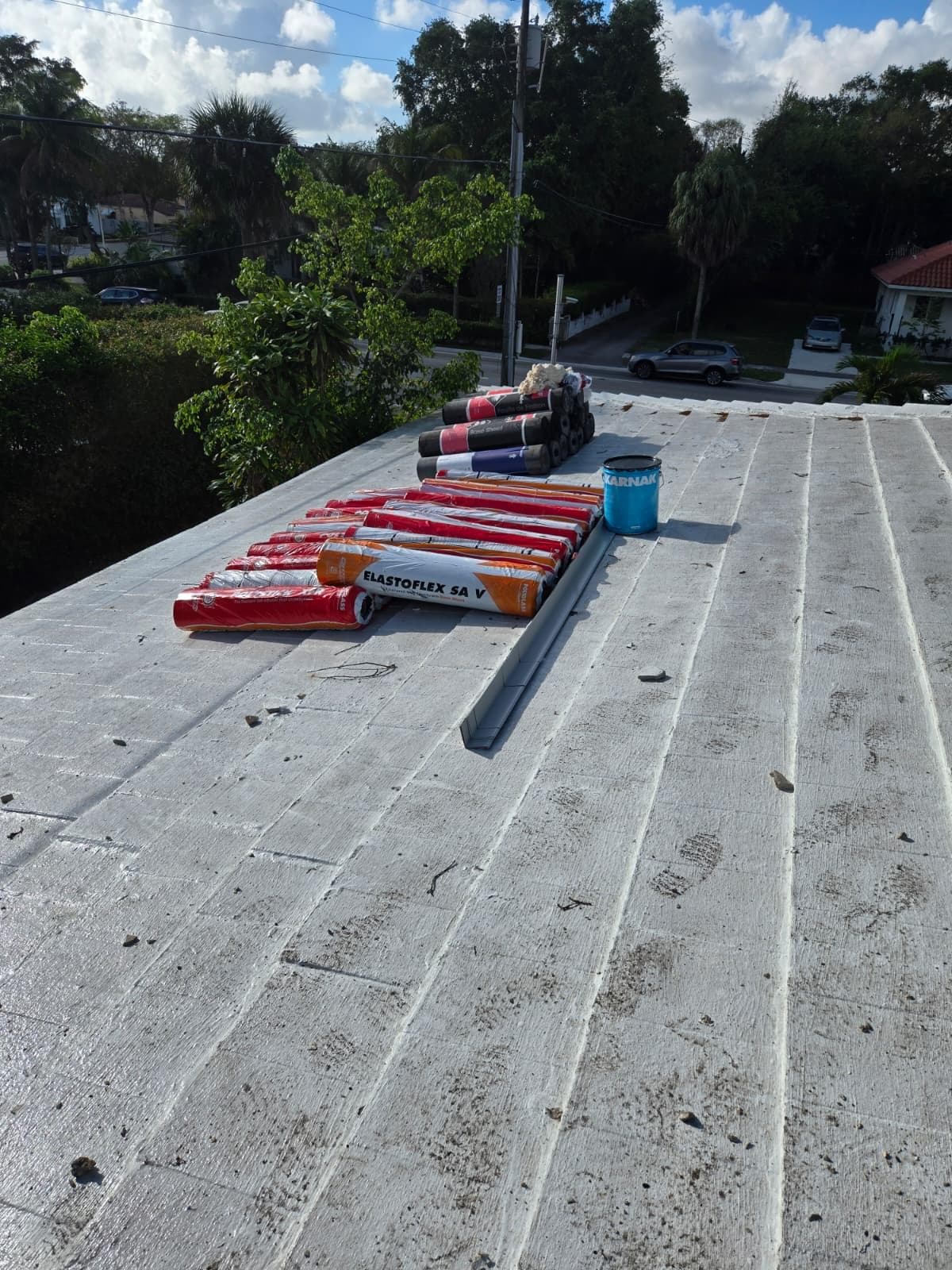
Your roof is the most critical line of defense. It takes the full force of the storm, and when it fails, everything below it fails too. Have it professionally inspected every year, ideally in April or May before the season rush.
What a proper inspection covers:
- Missing, lifted, or damaged shingles or tiles
- Flashing condition around all penetrations (vents, chimneys, skylights)
- Soffit and fascia integrity
- Signs of existing moisture intrusion in the attic
- Remaining life expectancy given the material type
Roofing companies book solid by late May. Call in April.
If the roof is over 20 years old, showing significant wear, or if your insurer has already sent a non-renewal notice, a replacement before hurricane season is worth the investment. A damaged roof in a storm can cost tens of thousands to remediate — plus interior damage if water gets in.
Note: many Florida homeowners' insurers have started non-renewing policies on homes with roofs over 15 years old. Check your coverage status now, not in June.
Windows, Doors, and Opening Protection
All exterior openings need to be rated for wind and impact in South Florida. That means either:
- Impact windows and doors (no prep required), or
- Accordion, roll-down, or panel shutters that can be fully closed over every opening
Test every shutter before June. Accordion shutters that haven't been operated since last season often have corroded tracks or stiff hinges. They need to close completely and latch fully or they're not doing what you're counting on them to do.
If any shutter is damaged, corroded, or missing hardware, repair or replace it before storm season. Also: if you have panel shutters and you haven't located all the panels since last year, now is a good time to do that. (They're usually behind the water heater, or possibly in the garage under eight years of accumulated sporting equipment.)
For homeowners still running standard windows with no shutter coverage: permit applications for impact windows take 2–6 weeks in Miami-Dade and Broward. Starting in April means installation before June. Starting in May is a gamble.
Garage Door
The garage door is one of the most vulnerable points in a South Florida home during a hurricane. An older single-skin door can fail under hurricane-force winds and allow pressure to enter the structure — the resulting force can lift the roof.
Check:
- Wind rating (there should be a sticker or manufacturer documentation)
- Track condition — straight, firmly anchored to the framing
- Smooth operation without binding
Bracing kits for non-rated garage doors are affordable and a reasonable stopgap. Replacement with an impact-rated door is the complete solution. Both are significantly cheaper than the structural repair that follows an interior pressure event.
Soffits, Fascia, and Exterior Trim
Loose soffits are a consistent failure point in South Florida hurricanes. Wind works under a loose panel, peels it away, and the attic is immediately exposed to rain and debris. This creates water damage that has nothing to do with your roof condition.
Walk the full perimeter in April and look for:
- Soffits that are loose, cracked, sagging, or no longer fully secured
- Fascia boards that are soft, rotted, or pulling away from the roofline
- Trim separating from the wall
This is inexpensive to address in spring. It is expensive if it fails during a storm.
Gutters and Drainage
Clogged gutters in a tropical storm back water up under the roof edge and into the fascia — causing leaks that look like roof failures but aren't.
Before June:
- Clean gutters and downspouts of all debris
- Ensure downspouts discharge at least 6 feet from the foundation
- Check for loose or sagging sections and reattach
- If you have large trees near the house, consider gutter guards
Professional gutter cleaning is inexpensive — call for a free estimate.
Trees and Landscaping
Dead branches and overextended trees become projectiles. South Florida's palms and large canopy trees are particularly high-risk during sustained high winds.
Before June:
- Remove any dead branches within striking distance of the home, carport, or power lines
- Have an arborist evaluate any large trees leaning toward the structure
- Remove dead palms entirely — they fall whole and weigh hundreds of pounds
- Cut back large overhanging branches from trees you're keeping
Professional tree trimming varies by size and count — budget for it before the season, not after.
Insurance Review (Do This in April)
Pull out your homeowner's insurance policy and go through these specifically:
Wind deductible. In Florida, the wind deductible is separate from your standard deductible — commonly 2% to 5% of the insured home value. On a typical South Florida home, that can be a significant amount out of pocket before your insurer covers anything. Know your number.
Flood coverage. Standard homeowner's insurance does not cover flooding. Not tropical storm surge. Not street flooding from overwhelmed drainage. Not the water that comes in your front door when the canal overflows. You need a separate NFIP or private flood policy for that. And the National Flood Insurance Program has a 30-day waiting period before coverage begins. A storm that forms and strengthens takes roughly 5 days to reach South Florida. These timelines are not compatible. Buy flood insurance in April, not June.
Roof age and condition. Many Florida insurers now require roofs to be under 15 years old or have a remaining life expectancy documented by an inspection. If your policy was recently non-renewed, find out why and whether a roof replacement or documented inspection resolves it before storm season.
Generator
If you have a standby generator, test it now. Check oil, coolant, and fuel supply. Run it under load for 30 minutes. South Florida power outages after significant storms can last 2–10 days.
If you don't have one and want one: whole-home standby generators (Generac, Kohler) are back-ordered by April in a busy season. Buy or order in January or February if this is the year you're making the decision.
Emergency Kit
Brief version — keep this stocked and accessible:
- 1 gallon of water per person per day, 7-day supply minimum (a family of four needs 28 gallons)
- Non-perishable food
- Flashlights, batteries, phone charging banks
- First aid kit and 2-week medication supply
- Cash (ATMs, card readers, and online banking all fail in extended outages)
- Copies of insurance policies, IDs, home deed, and medical records
Post-Storm Checklist (What Most Homeowners Skip)
Most pre-season guides stop before the storm ends. This is the part that matters after:
Immediately after the storm passes:
- Do not enter any room with standing water if power may still be on — electrocution risk is real
- Check the roof from the ground with binoculars before going up. Look for missing tiles, exposed decking, or displaced flashing
- Document all visible damage with photos and video before any cleanup or temporary repairs
- Call your insurer to open a claim before making any permanent repairs — premature repairs without documentation can complicate coverage
- Check soffits, fascia, and gutters from ground level — what looks like minor damage from inside the attic often starts with a separated soffit
Within 24–48 hours:
- Photograph all damage in detail — interior and exterior
- Keep all receipts for emergency repairs, temporary tarping, or board-up work (these are often reimbursable under your policy)
- Request a contractor assessment in writing — not just a verbal quote
- If your insurer sends an adjuster, you're entitled to have your own contractor or public adjuster present. You don't have to accept the insurer's damage estimate without question
Before contractors arrive:
- Get written estimates from at least two licensed contractors
- Verify license through the Florida DBPR website before signing anything
- Don't pay more than 10% down before work begins — state law limits contractor deposits after a declared disaster
Frequently Asked Questions
When should I start hurricane prep in South Florida?
April and May. Contractor schedules are open, permits process at normal speed, and hardware is available. Once a named storm enters the Gulf, all of that changes within 48 hours.
Do I need flood insurance in South Florida?
If you're in a FEMA Special Flood Hazard Area (Zone A or AE), your mortgage lender almost certainly requires it. But flooding is a risk throughout South Florida — storm surge, overwhelmed drainage systems, and canal overflow affect areas well outside the mandatory zones. Check your flood zone at msc.fema.gov. Buy before June.
What is the My Safe Florida Home program?
A state-funded program offering free wind mitigation inspections and matching grants up to $10,000 for qualifying improvements — impact windows, roof reinforcement, opening protection. Funded through the state budget and limited. Check current availability at mysafefloridahome.com.
What happens if I wait until May to get impact windows?
The lead time is the problem — not the cost. Miami-Dade permit processing takes 2–6 weeks. If you start in May, you may not have installation complete before the first storm of the season. If your openings need protection this year, start in March or April.
What happens if my roof fails during a hurricane and I'm not covered?
Wind damage is typically covered under homeowner's insurance — but only if your policy is active and your roof meets the insurer's age/condition requirements. If your policy was non-renewed due to roof age and you didn't replace coverage, the full repair cost is yours. A major storm on an aging roof in Miami can result in catastrophic combined roof and interior damage.
Is a bracing kit enough for my garage door?
For doors that are structurally sound but not wind-rated, bracing kits meaningfully improve wind resistance. They're a reasonable stopgap. A proper impact-rated door replacement is the complete solution. If your door is showing signs of structural failure — rust, bent panels, failing springs — don't brace it. Replace it.
Can I add hurricane shutters in May and still be protected by June 1?
Usually yes. Accordion shutters can often be installed in 2–4 weeks. Panel shutters are available off the shelf. Impact windows are the tight one — if you're starting in May, call immediately and get an honest lead time from your contractor before assuming you're covered.
We do roof inspections, impact window installation, shutter installation, soffit and fascia repair, and full hurricane prep assessments across Miami-Dade and Broward. If you want an honest look at what your home needs before storm season, call (786) 983-7928, Monday through Saturday, 8am to 7pm.
If you just need gutters cleaned and a couple of loose soffits reattached, that's a handyman job and we'll tell you that. Save the contractor call for work that actually needs one.