
Tile Roofing · Miami-Dade · Broward · Palm Beach
Tile Roof Installation in South Florida
Concrete and clay tile options, NOA-certified and properly installed for South Florida's code. The material that's defined South Florida rooflines for a century — and the one that handles this climate better than most of the alternatives.
Concrete vs. Clay
Tile Options for South Florida Homes
Concrete Tile
The most common tile type in South Florida. Concrete tile is durable, wind-resistant when properly installed, and available in a wide range of profiles — barrel, flat, S-style. More affordable than clay. Color can fade slightly over 20+ years.
Clay Tile
The original South Florida roofing material. Clay tile doesn't fade — the color is baked into the material. Extremely durable, resistant to South Florida's salt air and humidity, and carries premium curb appeal. The longest lifespan of any common roofing material in this climate.
What Most Contractors Skip
Tile Is Heavy. Older Homes Need a Structural Check.
Tile roofing weighs approximately 900–1,000 lbs per square (100 sq ft). Asphalt shingles weigh 200–350 lbs per square. If a home was originally built with a shingle roof, the framing may not have been engineered for the additional load that comes with tile.
We include a structural assessment with every tile estimate on homes where the original material was shingle. If the framing needs reinforcement, we tell you before you commit — not after we've started. It doesn't happen often, but when it does, you want to know upfront.
Why Tile Works Here
The Material That Fits This Climate and This Architecture
Tile performs well in South Florida for reasons that aren't obvious. The barrel profile — the classic curved tile shape — creates an air space between the tile and the underlayment that ventilates the roof deck, reducing heat transfer into the attic. In a climate where cooling costs dominate, that's meaningful.
Tile also doesn't absorb moisture the way asphalt shingles do. South Florida's humidity doesn't degrade it. The salt air near the coast doesn't corrode it. The UV that shortens the life of most roofing materials barely affects fired clay or dense concrete.
And then there's the aesthetic: the Mediterranean and Spanish-colonial architecture that defines neighborhoods from Coral Gables to Boca Raton looks right with a tile roof. It's not nostalgia — it's the right material for the style, performing the way it was designed to.
Frequently Asked Questions
How much does a tile roof cost in South Florida?
Pricing depends on tile type, roof size and pitch, and current roof condition. All quotes include tear-off, new underlayment, and installation. Permits required and included. Call for a free estimate.
How long does a tile roof last in Florida?
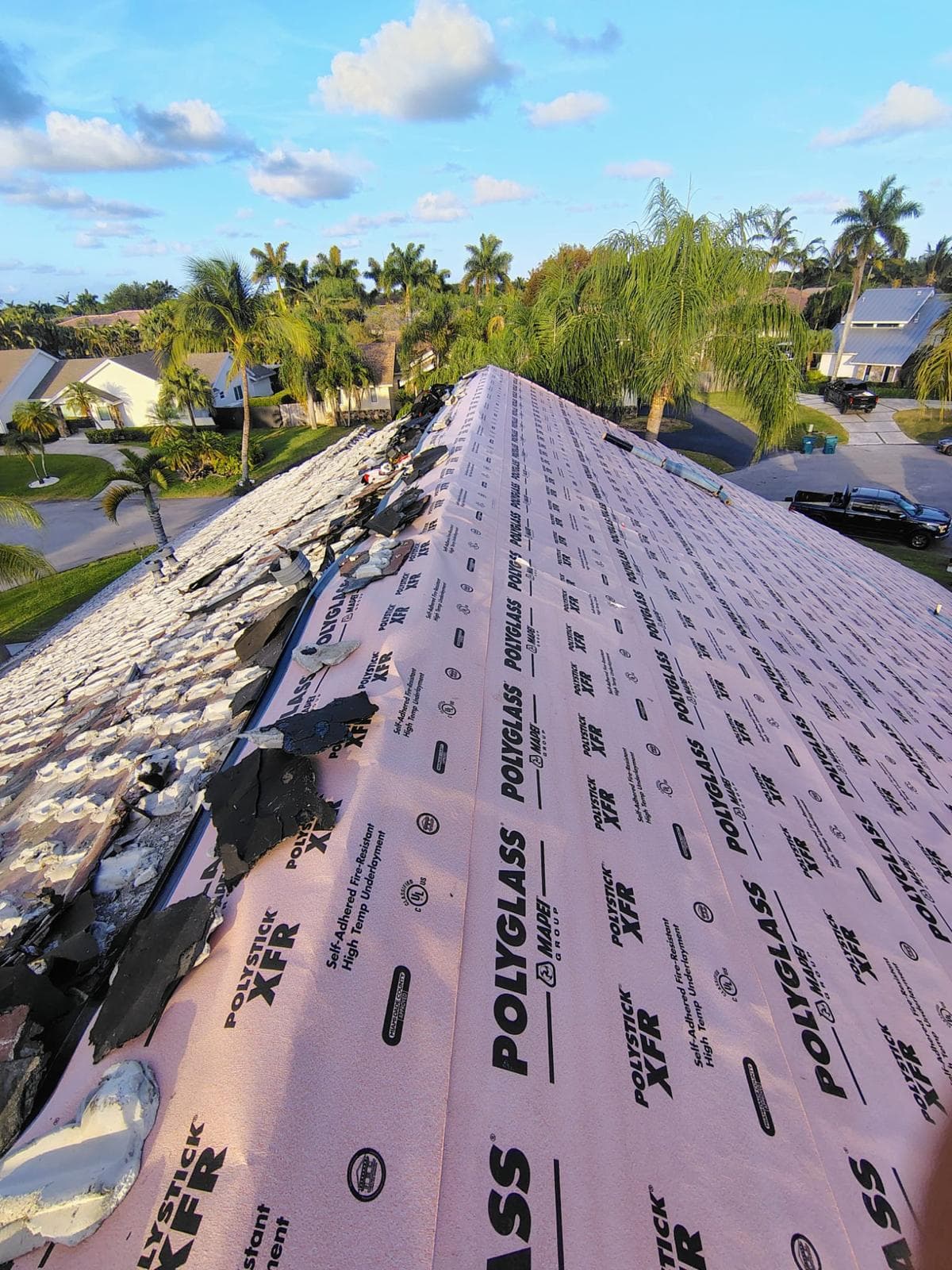
Concrete tile: 25–40 years. Clay tile: 50+ years. Tile's ceramic and concrete composition handles South Florida's UV exposure better than organic materials. The underlayment beneath the tile — not the tile itself — is typically what fails first and triggers replacement.
Does my home need a structural assessment before tile installation?
Older homes — generally pre-1985 construction — often do. Tile roofing weighs 900–1,000 lbs per square (100 sq ft), which is significantly heavier than asphalt shingle. Homes originally built with shingle roofs may not have been engineered for that load. We include a structural check before installation and will tell you if your home needs any framing reinforcement.
What is the difference between concrete tile and clay tile?
Clay tile has a longer lifespan (50+ years vs. 25–40 for concrete), doesn't fade because the color is fired into the material, and costs more. Concrete tile is more affordable, widely available in South Florida profiles, and still a strong performer. For most homeowners, concrete tile is the practical choice. For those who want to install a roof once and never think about it again, clay tile is the argument.
Why is tile roofing so common in South Florida?
Two reasons: climate performance and style. Tile handles UV, humidity, salt air, and heat cycling better than asphalt shingles. And the Mediterranean and Spanish-colonial architectural styles that dominate South Florida design — from Coral Gables to Palm Beach — look right with a tile roof. Form and function converged on the same answer.
Do tile roofs require special maintenance?
Periodic inspection matters more than active maintenance. Cracked or displaced tiles should be replaced promptly — a missing tile is a water intrusion point. The underlayment beneath the tile should be inspected every 10–15 years and replaced as it nears end of life. Tile itself rarely needs cleaning, though algae and mold can be treated with a soft wash.
Does a tile roof qualify for insurance discounts?
Yes. Tile qualifies for wind mitigation discounts, particularly if the installation includes secondary water barrier underlayment and meets the attachment method requirements on the OIR-B1-1802 form. We provide the wind mitigation report after installation. Discounts vary by insurer and policy.
Free Tile Roof Estimate
Miami-Dade, Broward, and Palm Beach County. Structural assessment included with every quote. Written estimate with material options and full pricing.
Call (786) 983-7928Before You Decide
Guides Worth Reading First
- Concrete vs Clay Tile Roof: Which One Earns Its Price in FloridaBoth are tile. That is roughly where the similarity ends. One outlives the other by decades, and the other costs meaningfully less to put on your house.8 min read
- Metal Roof vs Tile Roof: The Two Roofs Worth Arguing AboutOne of these outlasts the other by twenty years and weighs a quarter as much. The other costs less and looks like it belongs on a Miami house. Here is the honest comparison.9 min read
- How Long Do Roofs Last in Florida? Honest Lifespan by Material (2026)Florida's UV, humidity, and hurricane season cut every roof's lifespan short. Here's the real lifespan by material, the warning signs, and when to replace vs. repair.8 min read