
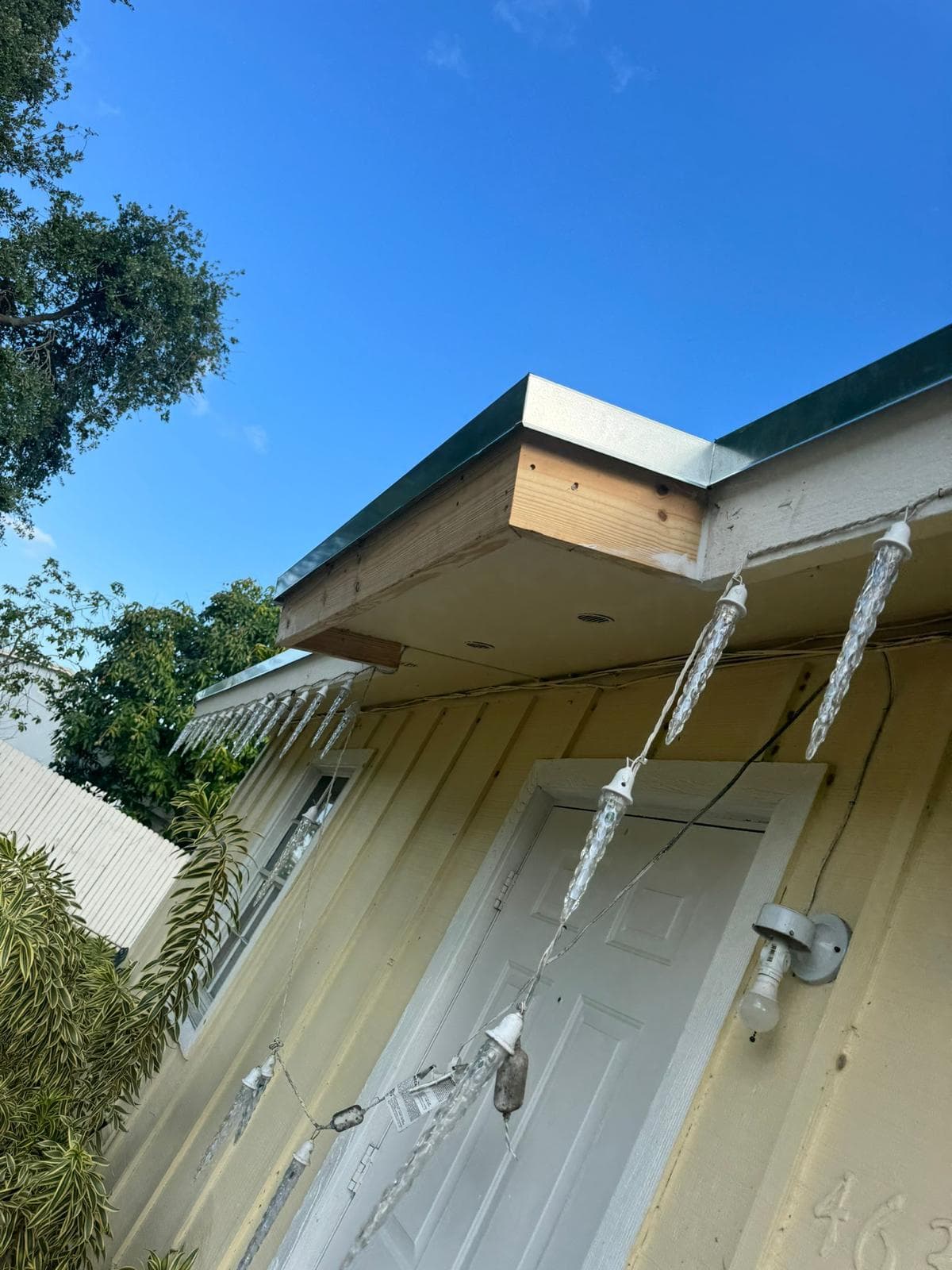
Flat Roofing · Miami-Dade · Broward · Palm Beach
Flat Roof Installation & Repair in South Florida
TPO, modified bitumen, and PVC systems for residential and commercial flat roofs. Every job starts with drainage — because that's where flat roof problems actually begin.
The Real Cause of Most Flat Roof Failures
Every Flat Roof Job Starts with Drainage
A flat roof isn't actually flat — it needs a minimum slope of 1/4 inch per foot to drain. When it doesn't drain properly, water ponds. Ponding water finds every seam, every penetration, every small imperfection in the membrane. That's how most flat roofs fail.
Replacing the membrane without addressing drainage gives you a new leak in 3 years instead of fixing the old one. We assess slope and drainage before we quote anything else.
System Comparison
Flat Roof Systems & Pricing
Three main options for South Florida residential and commercial flat roofs. Each has a different cost, lifespan, and installation method.
TPO (Thermoplastic Polyolefin)
20–30 years
Advantages: Most popular choice for South Florida. Reflects up to 78% of solar radiation — meaningful energy savings on a flat roof baking in the sun all day. Lightweight, weld-seamed joints, resistant to UV and standing water.
Trade-offs: Quality varies by installer. A poorly welded seam fails faster than the membrane itself. Installation quality matters more than brand.
Modified Bitumen
15–20 years
Advantages: Proven system, been on South Florida roofs for decades. Torch-applied or cold-applied. Handles ponding water well when properly installed.
Trade-offs: Shorter lifespan than TPO. Torch application requires experienced installers — improperly done it's a fire risk. Not as energy-reflective as white TPO.
PVC (Polyvinyl Chloride)
20–30 years
Advantages: Excellent chemical resistance — useful for roofs near kitchen exhaust or areas with grease exposure. Strong weld seams, reflective surface.
Trade-offs: Higher cost than TPO. Overkill for most residential applications unless there's a specific chemical exposure concern.
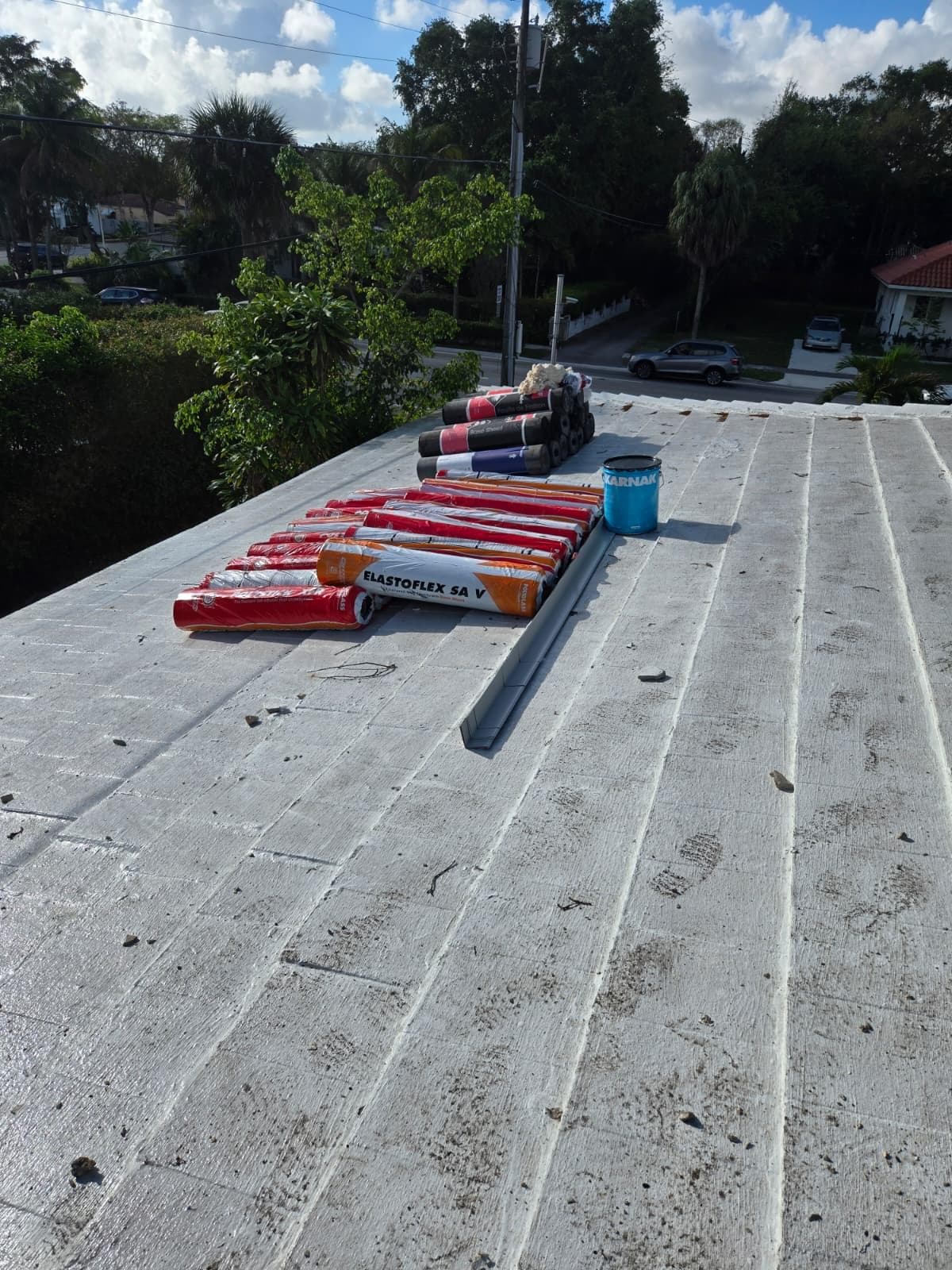
Every installation includes tear-off, drainage assessment, new insulation layer, and membrane. Permits required and included. Call for a free estimate.
South Florida Conditions
What Makes Flat Roofing Different Here
South Florida's flat roofing environment is more demanding than most of the country. Year-round UV exposure degrades membranes faster. Afternoon thunderstorms drop significant water volume quickly. Hurricane season brings wind uplift forces that test every seam and penetration.
A TPO system that performs adequately in Georgia may fail early in Miami-Dade if the installer uses materials rated for lighter UV exposure. We specify products with the UV resistance ratings appropriate for this latitude.
Scuppers — the drains that channel water off a flat roof — need to be kept clear year-round. Leaves, palm fronds, and debris block them. A blocked scupper means ponding water after every rainstorm. We include scupper inspection in annual maintenance checks.
Frequently Asked Questions
How much does a flat roof cost in South Florida?
Cost depends on the membrane system chosen, roof size, and current drainage conditions. TPO is the most common and most cost-effective residential option. Call for a free estimate — we assess drainage first before quoting anything.
How long does a flat roof last in Miami's climate?
TPO and PVC: 20–30 years with proper maintenance. Modified bitumen: 15–20 years. South Florida's UV exposure and heat stress are harder on flat roofing than most other climates — proper drainage and annual inspections meaningfully extend the lifespan of any membrane system.
What is the best flat roofing system for South Florida?
For most residential applications, TPO. It reflects heat (important in a climate where the roof bakes all day), handles South Florida's UV exposure well, and has a 20–30 year lifespan at a reasonable cost. The key differentiator isn't the membrane — it's the installer. A well-welded TPO outperforms a poorly-installed PVC every time.
Why does my flat roof keep leaking?
Almost always drainage. Flat roofs aren't truly flat — they need a slight slope (minimum 1/4 inch per foot) to drain. When drainage is inadequate or blocked, water ponds. Ponding water finds every seam and penetration eventually. If you're getting repeat leaks in the same areas, the drainage design or maintenance is the issue, not just the membrane.
Do flat roofs require permits in Miami-Dade and Broward?
Yes. Full replacement requires a permit in both counties — and in Palm Beach. Repairs may or may not, depending on scope. We pull permits on every installation.
Can I put a new membrane over the old one?
Sometimes — if the existing substrate is structurally sound and drainage is adequate. A re-cover avoids tear-off cost and dump fees. But if there's moisture trapped in the existing insulation, a re-cover seals the problem in and accelerates failure. We evaluate before recommending.
How do I know if my flat roof needs replacement vs. repair?
Repair makes sense for localized seam failures, isolated penetration leaks, or surface damage limited to a small area. Replace when: the membrane is near end of life, there are widespread seam failures, the insulation underneath is moisture-compromised, or you're getting repeat leaks across the entire surface. An inspection tells you which category you're in.
Free Flat Roof Assessment
We cover Miami-Dade, Broward, and Palm Beach County. We'll assess your drainage, current membrane condition, and give you an honest recommendation on repair vs. replacement.
Call (786) 983-7928